Aurora’s expansion from a mid-19th-century mill town on the Fox River into Illinois’s second-largest city means we inherit a patchwork of fill, reworked glacial drift, and natural deposits like the Wedron Formation tills. The post-war boom filled old river channels and wetlands with uncontrolled material that still shows up in borings near downtown and the East Side. In our experience, specifying a Proctor test early is the only way to separate what can be compacted in place from what needs to be undercut. Whether we run the Standard Proctor (ASTM D698) for landscaping subgrade or the Modified Proctor (ASTM D1557) for heavy pavement beneath a warehouse off I-88, the goal is the same: a density target that an excavator can actually hit with the moisture available on site.
We often tie results to a sand cone density check during lift placement, and when the subgrade is marginal we look at lime or cement modification before bringing in structural fill.
A Proctor curve built on representative borrow samples is the cheapest insurance against a failed nuclear gauge test during the first lift.
Technical details of the service in Aurora Illinois
Local geotechnical conditions in Aurora Illinois
A warehouse pad off Butterfield Road was compacted to 98% Modified Proctor on paper, but the one-point field test kept failing. The borrow source had shifted: the contractor opened a new lift in a lens of lacustrine silt with an optimum 4 points wetter than the lab curve. Nobody updated the target moisture, so every pass with the sheepsfoot roller was on the dry side of the curve. The floor slab showed differential heave the first winter. What we see repeatedly in Aurora is that the Proctor result is only as good as the sample it was run on—and borrow changes fast across the Valparaiso and Batestown moraines. Running a companion Atterberg limits test on the same material flags plasticity changes before they become a compaction problem.
Our services
We run Proctor testing as part of a wider earthwork package tailored to the Fox Valley’s glacial stratigraphy. The three services below cover most Aurora projects from utility trenches to big-box pads.
Standard Proctor (ASTM D698)
For landscape subgrade, utility backfill, and lightly loaded footings where typical compaction effort is expected. We report the full moisture-density curve with zero-air-voids line.
Modified Proctor (ASTM D1557)
Specified for structural fill under slabs, heavy-duty pavement, and IDOT-regulated work. The higher compactive effort simulates modern rollers and heavier trafficking.
Field Compaction Correlation
We pair the lab Proctor with nuclear gauge or sand cone testing on your lift to verify percent compaction in real time, adjusting for moisture swings across the working day.
Common questions
What does a Proctor test cost for a site in Aurora?
A single-point Standard or Modified Proctor typically runs between US$100 and US$240, depending on whether we run the full five-point moisture family or a quick one-point check against an existing curve.
Which Proctor method applies to an IDOT road job?
Illinois Department of Transportation specs almost always call for the Modified Proctor (ASTM D1557, Method C) on subgrade and base course, with field compaction verified to at least 95% of the lab maximum.
How long does the lab need to deliver a Proctor curve?
Standard turnaround is 48 hours once the sample arrives at our lab. If we need to air-dry a wet clay till from the Fox Valley, we add 24 hours to avoid oven-drying that would alter the soil’s compaction behavior.
Can you run a Proctor on recycled concrete aggregate or slag fill?
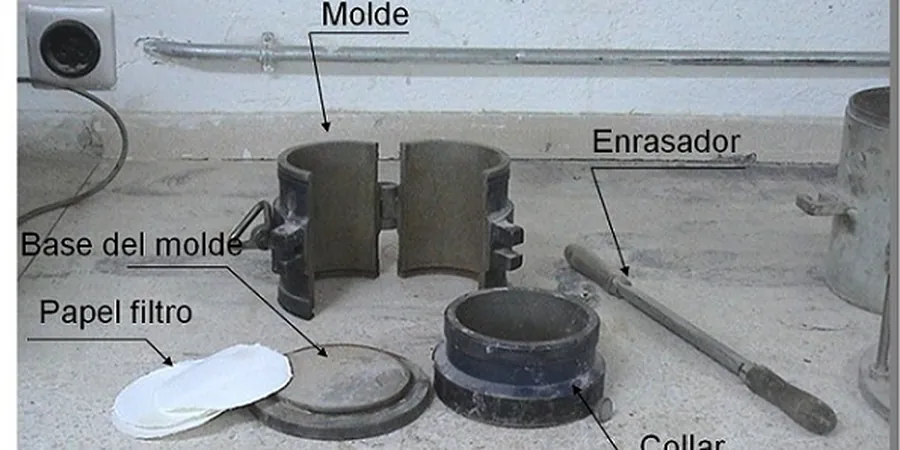
Yes, though we switch to the 6-inch mold when the material contains particles larger than the 3/4-inch sieve. We also modify the compaction procedure following ASTM D698/D1557 guidance for oversized particles.