The Fox River Valley cuts through Aurora, leaving behind a complex sequence of glacial outwash and lacustrine clays that make deep excavation design anything but straightforward. With the city’s downtown redevelopment pushing basements deeper and the population hovering around 180,000, the demand for excavation support that accounts for layered stratigraphy has grown significantly. We routinely encounter stiff silty clays overlying loose to medium-dense sand lenses near the river, a profile that demands careful lateral earth pressure analysis. Before steel goes into the ground, combining the excavation design with a CPT test helps delineate those sand seams that control base stability, and a triaxial shear test on undisturbed Shelby tube samples gives us the drained strength parameters needed for a realistic finite element model of the cut.
In Aurora’s Fox River corridor, the difference between a dry excavation and a blowout often lies in identifying a six-inch sand seam before dewatering starts.
Technical details of the service in Aurora Illinois
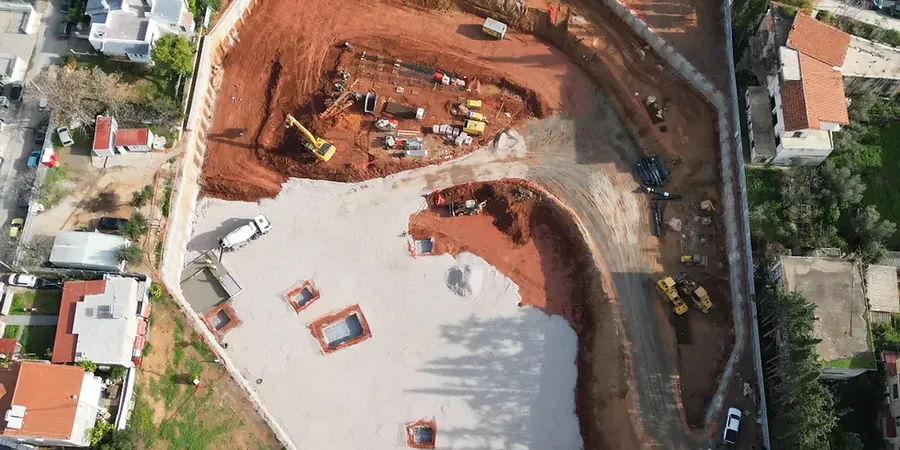
Local geotechnical conditions in Aurora Illinois
In the low-lying parcels east of the river, we have seen multiple projects where the contractor assumed a simple sump pump would handle groundwater, only to find artesian pressure in a sand lens blowing out the excavation bottom. That is not a repair you want to explain to the owner after a concrete pour is scheduled. Base heave in soft clay is another recurring issue when the excavation exceeds 18 feet without an adequate strut or tieback level near the bottom of the cut. Aurora sits in Seismic Design Category B under the current IBC, so seismic earth pressures rarely govern over static loads, but the loose saturated sands in the valley are susceptible to flow liquefaction if not properly densified. Before excavation begins, evaluating the site with a liquefaction assessment provides the trigger for whether Improvement is needed prior to cutting. The cost of a re-design mid-project dwarfs the upfront engineering fee every single time.
Our services
Our Aurora excavation design work covers the full engineering cycle—from initial geotechnical investigation through to construction-phase submittals. We deliver sealed calculation packages that the City of Aurora Building Department will accept without endless rounds of comments.
Excavation Support Design
Complete design of soldier pile and lagging, sheet pile, secant pile, and soil nail walls tailored to Aurora’s glacial till and Fox River Valley stratigraphy. Includes lateral earth pressure calculations, global stability analysis, and dewatering system design.
Tieback & Anchor Design
Grouted tieback design with bond zone verification in the dense till and dolomite bedrock common to the Aurora area. We specify proof testing and performance testing procedures aligned with PTI recommendations and project-specific deflection tolerances.
Construction-Phase Monitoring & Peer Review
Review of contractor submittals, inclinometer and settlement point monitoring plans, and instrumentation data interpretation during excavation. We help Aurora contractors stay compliant with OSHA Subpart P and the site-specific excavation permit conditions.
Common questions
What does geotechnical design for a deep excavation in Aurora typically cost?
For a typical commercial or multi-family excavation project in Aurora, the engineering design fee ranges from US$1,890 to US$9,080 depending on excavation depth, proximity to adjacent structures, and the complexity of the groundwater control system. A straightforward 15-foot cut with soldier piles in stiff till falls on the lower end, while a 30-foot excavation with multiple tieback levels, dewatering modeling, and a detailed global stability analysis will be at the upper end of that range.
How does the Fox River affect deep excavation design in downtown Aurora?
The river’s influence extends well beyond the banks. Groundwater levels in the downtown area are closely tied to river stage, and the alluvial soils deposited by the Fox River contain discontinuous sand and gravel lenses that can act as conduits for water. Our designs incorporate a groundwater cutoff analysis that accounts for seasonal high river levels, and we often specify wellpoint or deep well dewatering systems rather than relying on open pumping from the excavation base.
What is the typical shoring system for a basement excavation in Aurora’s glacial till?
Most basement excavations between 12 and 25 feet deep in Aurora’s stiff glacial till use soldier pile and lagging with one or two levels of grouted tiebacks. The till provides excellent stand-up time for lagging installation, and the dolomite bedrock on the west side allows for short rock sockets that reduce pile length. In areas with deeper till and saturated silts, we often switch to a sheet pile wall with internal bracing to control groundwater inflow and minimize settlement behind the wall.
Do I need a separate dewatering permit for my Aurora excavation project?
The reference range for this service in Aurora Illinois is US$1.890 - US$9.080. The final price depends on the project scope and volume.