Aurora sits at an elevation of roughly 720 feet along the Fox River, a geography that creates distinct soil challenges from the river terraces to the glacial till uplands. The last major seismic event that influenced regional codes was the 2010 Illinois earthquake near Virgil, just 25 miles north, reminding every developer that the Midwest isn't immune to ground movement. A soil mechanics study in Aurora IL does more than check a permit box—it defines the bearing stratum, predicts settlement, and sets the compaction targets your contractor needs. When we run a Proctor test on silty clay fill from a downtown redevelopment site, we're looking for the moisture-density relationship that controls lift thickness and roller passes. The lab data feeds directly into foundation design, pavement sections, and excavation support decisions that save money before concrete is poured.
An extra two feet of overexcavation in soft Aurora silts costs less than repairing differential settlement five years after occupancy.
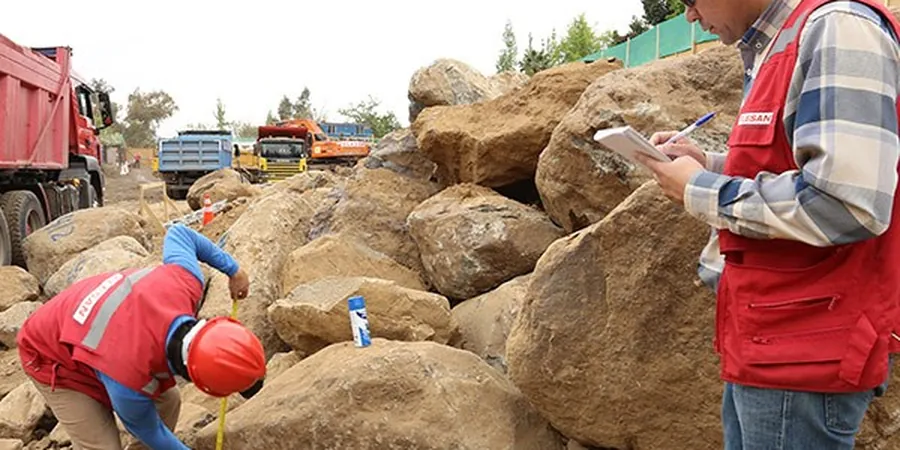
Technical details of the service in Aurora Illinois
Local geotechnical conditions in Aurora Illinois
Aurora's development arc moved west from the river in the 1960s and 70s, pushing residential subdivisions onto farmland underlain by compressible Peoria Silt. The original builders often stripped topsoil and placed footings directly on undisturbed material, but today's infill lots on previously graded pads are a different story—variable fill thickness, buried organics, and uncontrolled moisture create a patchwork of bearing conditions across a single building footprint. A geotechnical investigation that skips laboratory soil mechanics is effectively driving blind. We've pulled samples from Aurora's near-west side where the unconfined compressive strength dropped 60% between two borings spaced 40 feet apart, a variance that would overload one corner of a mat foundation if the structural design assumed uniform subgrade. The study quantifies that risk before excavation starts, so your contractor bids the right earthwork scope and your structural engineer sizes footings for the soil that's actually there, not the soil everyone hopes is there.
Our services
The soil mechanics study we deliver for Aurora projects combines field sampling with a full laboratory program. Everything ties back to the foundation type and site conditions.
Index Property Testing
Grain-size distribution by sieve and hydrometer, Atterberg limits, and USCS classification for every distinct stratum encountered in the borings. These baseline properties drive the entire geotechnical model.
Strength and Compressibility
Triaxial compression, direct shear, and one-dimensional consolidation tests on undisturbed Shelby tube samples. We provide effective stress strength envelopes and consolidation parameters for settlement analysis.
Compaction and Subgrade Evaluation
Standard and modified Proctor tests paired with CBR or resilient modulus for pavement design sections. We correlate lab optimums with field density specifications for the site's specific fill material.
Common questions
What does a soil mechanics study in Aurora IL typically cost for a single-family home lot?
For a standard residential lot in Aurora, a complete soil mechanics study—including two borings, Shelby tube sampling, Atterberg limits, grain-size analysis, Proctor, and a bearing capacity report—runs between US$3.060 and US$5.580 depending on depth to refusal and number of lab tests required. Sites with documented fill or near the Fox River floodplain tend toward the upper end because we sample deeper and run consolidation tests.
How deep do you sample for a soil mechanics study on a commercial building in Aurora?
We follow IBC Section 1803.5.2 and typically extend borings to a depth where the added stress from the foundation is 10% or less of the existing overburden pressure. For a three-story commercial building in Aurora with spread footings, that usually means 25 to 35 feet, but we go deeper if SPT blow counts indicate loose sand or soft silt at that depth. The lab program scales with the number of samples recovered from those deeper intervals.
How long does the laboratory phase take once you have the samples?
Index tests like grain-size and Atterberg limits turn around in 3 to 5 business days. Consolidation and triaxial tests need 7 to 10 business days because of saturation, consolidation, and shear stages. We sequence the lab work so the index data hits your desk first—that's often enough to lock in the foundation type while the strength and compressibility numbers finalize the reinforcement and dimensions.