Overlooking a variable water table in Aurora can turn a straightforward excavation into an expensive dewatering nightmare. We have seen contractors in Kane County hit unexpected sand lenses at just 8 feet deep, flooding the work area because pre-construction permeability assumptions were wrong. The Fox River valley and surrounding glacial deposits make generalized soil data unreliable. A field permeability test, whether a Lefranc in granular soils or a Lugeon in fractured dolomite bedrock, gives you the actual hydraulic conductivity number you need for dewatering design and cutoff wall specifications. Unlike lab tests on small samples, in-situ methods capture the effect of fissures, layering, and the real groundwater regime. Pairing this data with a detailed grain size analysis helps confirm the soil classification, while test pits allow for visual inspection of the strata before placing the packer assembly.
In-situ permeability values in Aurora's glacial till can be 100 times lower than the underlying outwash, a contrast that dictates whether a dewatering system will work or fail.
Technical details of the service in Aurora Illinois
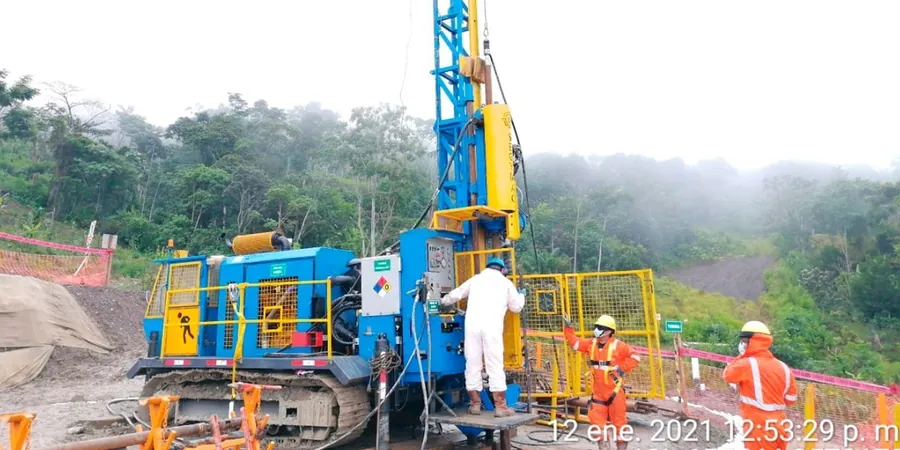
Local geotechnical conditions in Aurora Illinois
Aurora's location straddling both the Fox River floodplain and the upland moraines creates two distinct hydrogeologic risks within the same city limits. Near downtown and along the river, a permeable alluvial aquifer sits just below the surface, and miscalculating the field permeability by even half an order of magnitude leads to undersized wellpoint systems. The result is constant boiling at the excavation base and potential loss of ground, threatening adjacent historic foundations. Up on the west side, the weathered dolomite presents a different challenge. A Lugeon test that skips the low-pressure step can miss the onset of hydrojacking, giving a falsely high permeability and leading to grouting programs that fail to seal the rock mass. We have reviewed projects where contractors used textbook values instead of site-specific data, and the re-excavation costs in Aurora's tight urban lots ran deep into the contingency fund. Getting the field data right is not optional; it is the foundation of every dry excavation.
Our services
Our field permeability testing program in Aurora covers the full sequence from soil to rock, using methods that match the local geology.
Lefranc Permeability Test
Variable-head or constant-head test run in overburden soils. We isolate the target zone with a pneumatic packer to prevent cross-flow from perched water, common in Aurora's layered till.
Lugeon Packer Test
Five-stage pressure test in rock to evaluate fracture permeability and detect hydrojacking. We use a single or double packer assembly depending on core recovery and RQD.
Falling/Rising Head Slug Test
Quick-response test for moderate to high permeability soils. Suitable for the outwash sands found in Aurora's east side, providing rapid k estimates for dewatering design.
Pore Pressure Dissipation Test
Performed during CPTu soundings to measure in-situ consolidation and permeability characteristics of soft alluvial clays encountered near the Fox River.
Common questions
What is the difference between a Lefranc and a Lugeon test?
A Lefranc test measures permeability in soils, using either a constant or falling head method within a cased borehole. A Lugeon test is specifically for rock, injecting water under pressure into an isolated interval to calculate the Lugeon value, which reflects fracture openness. In Aurora, we often transition from Lefranc in the glacial overburden to Lugeon once we hit the Silurian dolomite bedrock.
How much does a field permeability test cost in Aurora, Illinois?
A standard Lefranc or Lugeon test program in Aurora typically ranges from US$570 to US$1.090, depending on the number of test intervals, depth, and whether a drilling rig needs to be mobilized for the specific site conditions.
Why can't I just use lab permeability instead of a field test?
Lab tests like the flexible-wall permeameter use a small, disturbed or intact specimen that rarely captures macropores, fissures, or thin sand seams. Aurora's glacial till has vertical fractures and silt partings that lab samples miss entirely. Field tests integrate the hydraulic behavior of a larger volume, giving you the mass permeability that governs real seepage rates.