Aurora sits on a complex stack of glacial drift and outwash deposits, with the Fox River slicing through the middle. In the older neighborhoods near Downer Place or the industrial corridors east of the river, fill thickness often exceeds six feet before you hit native clay. An exploratory test pit lets you see exactly what you're dealing with before a shovel breaks ground. We open trenches up to 14 feet deep, log the stratigraphy in place, and collect undisturbed samples for grain-size analysis. For projects in the floodplain where soft silts dominate, we coordinate closely with the geotechnical engineer to map the seasonal water table — because a footing designed without that data is a liability waiting to happen. Whether it's a commercial addition off Orchard Road or a utility tie-in downtown, direct observation beats a probe any day.
You can't design a foundation for Aurora's glacial till based on a boring log alone. A 12-foot test pit shows you the real story — cobbles, perched water, and fill contacts.
Technical details of the service in Aurora Illinois
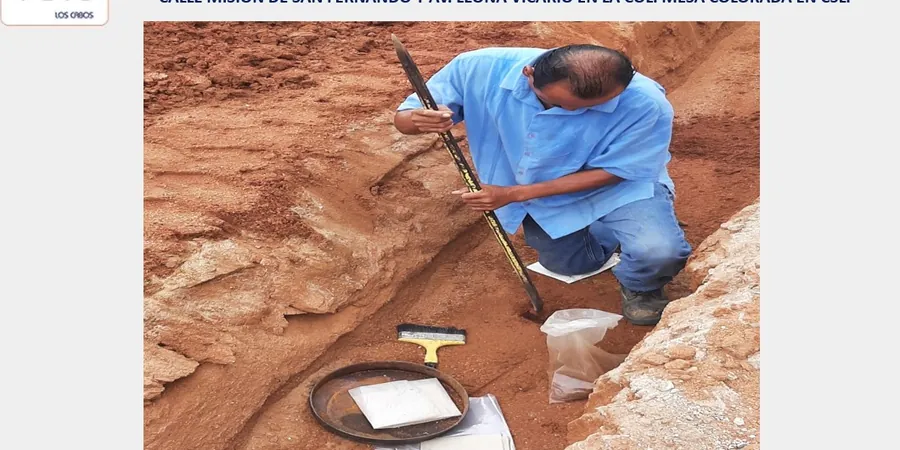
Local geotechnical conditions in Aurora Illinois
Aurora's population of roughly 180,000 means constant utility work, and a test pit placed without a locate ticket is a serious incident waiting to happen. We pre-clear every excavation with JULIE and the City of Aurora's engineering department. The bigger risk is encountering unmarked fill on old industrial parcels — think the east bank of the Fox River near the old rail yards. That material can contain anything from foundry sand to buried concrete, and it doesn't behave like natural soil. If you skip the test pit and rely on a few SPT blows, you miss the lateral extent of the fill and end up with differential settlement. We also watch for perched groundwater in the silty lenses between till layers; the Fox River Valley is full of these, and they can destabilize a trench fast if you're not prepared with proper shoring or sloping.
Our services
Every test pit we execute in Aurora includes the same core deliverables: a scaled pit log, field moisture readings, bulk samples, and a photographic record. The two services below cover the most common requests we get from structural engineers and utility contractors in the Fox Valley.
Utility Potholing and Substructure Verification
We open pits directly over existing footings, vaults, or buried lines to confirm elevation, material, and condition. Depth typically 6 to 10 feet, with a rapid turnaround sketch for the contractor within 24 hours.
Bulk Soil Sampling for Lab Compaction Curves
For Aurora projects requiring a Proctor curve or CBR value, we extract 100+ pound samples from the pit face at the specified depth. Samples are sealed on site and transported under chain of custody to our lab for immediate processing.
Common questions
How much does an exploratory test pit cost in Aurora?
For a standard test pit in the Aurora area, budget between US$430 and US$900. The final number depends on depth, access constraints, restoration requirements, and whether we need to coordinate traffic control on a street like Farnsworth Avenue.
What is the difference between a test pit and an SPT borehole?
A test pit is an open trench, typically 8 to 14 feet deep, that lets us see the soil in place — stratification, fill, cobbles, groundwater. An SPT borehole gives you blow counts and disturbed samples from depth but doesn't show lateral continuity. In Aurora's glacial terrain, we often use test pits for shallow foundations and SPT for deeper investigations, combining both data sets for a complete picture.
Do you handle restoration after the pit is backfilled?
Yes. We compact the backfill in controlled lifts, typically 8 to 12 inches thick, and test each lift with a nuclear density gauge. For landscaping or asphalt restoration, we coordinate with a local Aurora contractor to match existing grade and surface materials, including city sidewalk specs where required.