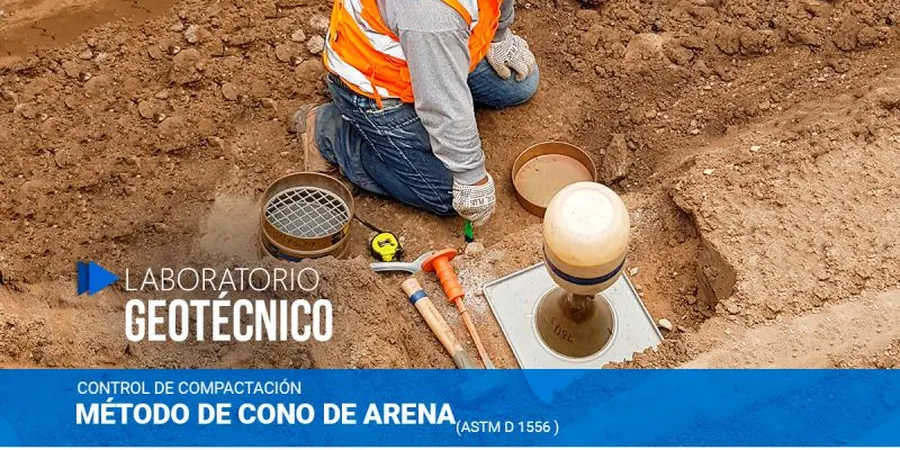
Glacial till and outwash deposits define Aurora's subsurface. The Batavia and Yorkville members sit under much of the city, creating a mix of silty clays and sandy gravel lenses that react differently to compaction energy. Our field density tests in Aurora IL catch density shortfalls before they turn into settlement claims. The sand cone method per ASTM D1556 tells you the in-place dry density right at the lift surface—no lab extrapolation, no guesswork. On a recent warehouse pad near the I-88 corridor, we correlated grain size data with sand cone results to confirm 98% Modified Proctor on a gap-graded gravel that had puzzled the earthwork sub. The Fox River floodplain adds another layer of complexity—moisture swings can fool a nuclear gauge, but the sand cone doesn't care about soil chemistry or scattered gamma photons.
A sand cone test costs a fraction of a subgrade failure—and in Aurora's silty clays, the difference shows up in two freeze-thaw cycles.
Technical details of the service in Aurora Illinois
Local geotechnical conditions in Aurora Illinois
An eight-story mixed-use project on North Broadway went through three cycles of slab cracking before anyone checked the backfill density under the ground-floor slab. Moisture meters read fine. The nuclear gauge gave passing numbers. The sand cone—run on a hunch—showed 82% compaction where 95% was specified. The fill was a silty clay from a nearby borrow pit, placed too wet and not proof-rolled. Aurora's winter frost depth, about 42 inches per the IBC frost zone map, amplifies any density gap into differential heave. The fix was expensive: remove the slab, recompact the upper 18 inches with moisture conditioning, and retest every lift. A sand cone program at the right time would have caught the problem for less than the cost of one concrete truck.
Our services
We provide field density testing across Kane and DuPage Counties with same-day reports and clear pass/fail documentation.
In-Place Density (Sand Cone)
ASTM D1556 field test on backfill, subgrade, and base course. Includes moisture content and percent compaction versus lab Proctor.
Nuclear Gauge Correlation
Side-by-side sand cone and nuclear gauge testing to build site-specific calibration curves per ASTM D6938.
One-Point Proctor Verification
Quick field check that the lab Proctor curve still represents the material being placed—critical when borrow sources change mid-job.
Compaction Acceptance Packages
Stamped reports with test location maps, density graphs, and compliance letters for municipal sign-off in Aurora and Naperville.
Common questions
How much does a field density test with the sand cone cost in Aurora?
A single sand cone test typically runs between US$100 and US$130, depending on site access and the number of tests per mobilization. Volume discounts apply when you schedule a full day of testing with multiple technicians.
How long does one sand cone test take on site?
About 20 to 30 minutes per point from excavation to weight recording. If the material needs a moisture content determination by oven drying, add 24 hours for the lab result, though we can provide a field-speedy estimate with a hotplate for immediate go/no-go decisions.
What's the advantage of the sand cone over a nuclear gauge?
The sand cone is a direct measurement of volume and mass—it doesn't need calibration against a specific soil's chemistry or moisture. In Aurora's glacial clays with variable iron content, the sand cone eliminates the chemical bias that can shift nuclear gauge readings by several percent.
When does IDOT require sand cone testing instead of a nuclear gauge?
IDOT specs often require sand cone verification when nuclear gauge results are in dispute or when the material contains high organic content, slag, or other atypical constituents. The sand cone also serves as the referee method for calibration checks on nuclear gauges per ASTM D6938.